Call for FREE Samples!


How To Clean Composite Decks
2024-07-19, Laura Nieto
Share:

How To Clean Composite Decking
Keeping your composite deck looking like new and extending its lifespan requires regular maintenance and proper cleaning techniques. In this comprehensive guide, we will cover everything you need to know about maintaining your composite decking. We'll start with general cleaning and preventative tips to keep your deck in top condition, followed by methods for removing dirt, grime, and water stains. You'll learn how to effectively tackle oil and grease stains and understand when and how to use sanding and pressure washing. We'll also give you safe techniques for removing snow and ice to ensure your deck remains beautiful and functional throughout the year. Here’s to years of happy days enjoying your deck!
General Cleaning and Preventative Tips
- Sweep your deck boards on a regular basis to prevent the buildup of loose dirt.
- To reduce the chances of tannins forming on your deck, don't allow damp leaves to remain on your deck; these may discolor the boards. Generally, a broom or leaf blower will work better than a garden hose for removing scattered foliage.
- Allow for proper water drainage; standing water can cause discoloration.
- Dislodge loose dirt and debris between deck boards with a broom.
- If food or drink is spilled, clean the deck immediately with soapy water made with mild dishwashing detergent and a soft sponge/rag.
- Install a splash guard mat under your grill to help protect your deck from grease stains.
- Mix pool solutions away from the deck. Be careful not to spill undiluted chlorine or pool salt directly on the boards.
- While normal day to day activities will not scratch your CALI Decking, like timber or any other flooring product, excessive activities will damage the surface. For example, skateboarding or dragging heavy furniture may cause the exterior to scratch or chip.
Removing Dirt, Grime, and Water Stains from Composite Decking
Maintaining the beauty and functionality of your composite decking requires regular cleaning, especially when it comes to removing dirt, grime, and water stains. Over time, these elements can accumulate and dull the appearance of your deck, making it less inviting.With the right approach, you can preserve the aesthetic appeal and structural integrity of your outdoor space for years to come.
To clean your deck, spray the affected area with a water hose to remove dirt from surface. Use warm soapy water made with mild dishwashing detergent and a soft sponge/rag to remove any dirt buildup. Avoid using strong products like bleach, SLR, sugar soap, etc. Scrubbing in the direction of the grain works best. Thoroughly rinse your composite deck off with a garden hose once you’re done.
Removing Oil and Grease Stains from Composite Decking
Precautions should be taken to avoid spilling oily and greasy products on your deck. Install a splash guard mat under your grill to help protect your deck from grease stains.
All oil, grease and food spills should be cleaned up as quickly as possible. Use warm soapy water made with mild dishwashing detergent and a soft non-metal scrub brush or a sponge/rag to remove any oil or grease. Thoroughly rinse your composite deck off with garden hose once you’re done. Note: Oil, grease, food, and other staining agents like red wine must be removed from the surface within 72 hours to maintain the deck’s 25-Year Limited Stain Warranty.
Can You Sand Composite Decking?
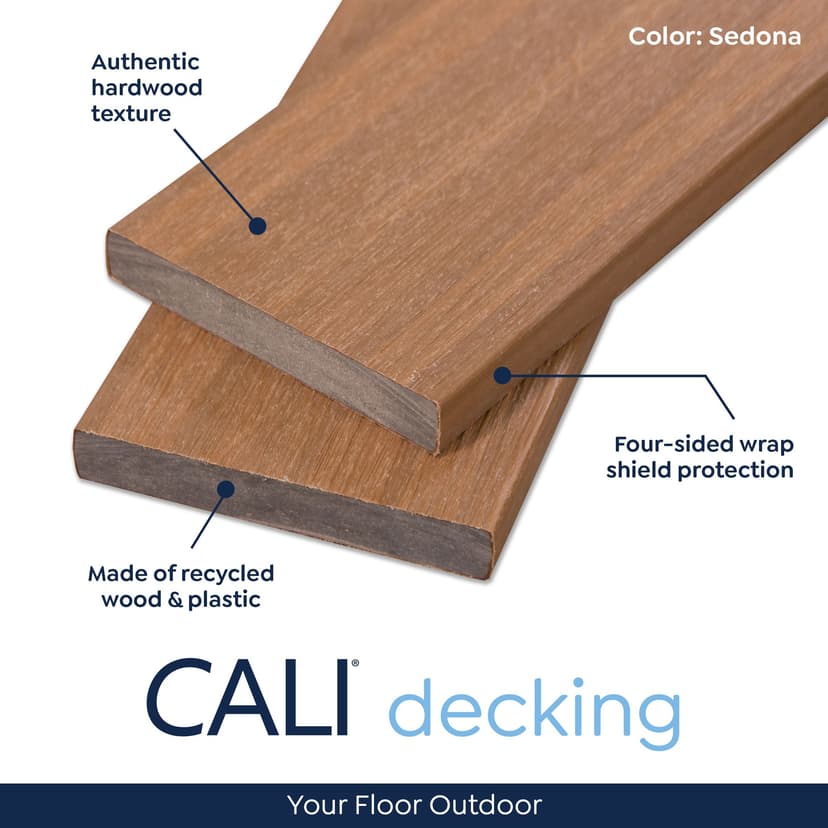
We understand the importance of maintaining the beauty and durability of your composite deck. While traditional wood decks might benefit from sanding, composite decking requires different care due to its unique composition and surface treatments. Here are some reasons why you should avoid sanding your composite decking unless it’s absolutely necessary:
- Surface Damage: Composite decking is engineered with a protective outer layer known as capstock, which is designed to resist fading, staining, and scratching. Sanding this layer can strip away its protective qualities, exposing the underlying material to the elements. This exposure can lead to moisture penetration, which may cause swelling, warping, or other forms of damage. Once the protective layer is compromised, the deck is also more prone to staining and scratching, negating one of the main benefits of composite materials.
- Aesthetic Impact: One of the key advantages of composite decking is its uniform and consistent appearance. Sanding can create uneven surfaces, which disrupt this uniformity and lead to noticeable patches. These patches may weather differently over time, resulting in a deck that looks patchy and worn. Unlike wood, composite materials do not have natural grains that can be sanded down evenly, so any sanding is likely to create an irregular look.
- Health and Safety: Sanding composite decking generates fine dust that can pose significant health risks if inhaled. This dust contains a mix of wood fibers and plastic particles, which can irritate the respiratory system and lead to long-term health issues. Proper protective equipment, such as masks and goggles, is essential when working with these materials. However, avoiding sanding altogether is a safer approach to maintain the health of those performing the maintenance.
We do not recommend sanding unless necessary as it may change the surface of the material. However, in the instance that a stain cannot be removed, you may try lightly sanding the affected area using sandpaper with a fine grit/grade.
By understanding the reasons why sanding is not suitable for composite decking, you can make informed decisions about how to care for your CALI composite deck. There are more effective and safer methods to ensure your deck remains beautiful and functional for years to come.

Can You Pressure Wash Composite Decking?
While pressure washing might seem like an efficient way to clean your deck, it's essential to understand the proper techniques and potential risks associated with this method.If used incorrectly, pressure-washing can cause damage and wear to a composite deck. Please use extreme caution.
- Surface Damage: Composite decking is designed to withstand everyday wear and tear, but the high pressure from a pressure washer can damage the surface. Excessive pressure can strip away the protective capstock layer, exposing the composite material beneath. This exposure can make the deck more susceptible to staining, scratching, and moisture damage. When using a pressure washer, it's crucial to use the lowest pressure setting and maintain a safe distance from the deck surface.
- Structural Integrity: Pressure washing at high pressure can not only damage the surface but also compromise the structural integrity of the deck. The force of the water can cause splintering, cracking, or even dislodging of deck boards, especially if the deck is older or has pre-existing weaknesses. Ensuring the pressure is kept at a safe level is key to avoiding such issues.
- Inconsistent Cleaning: Pressure washing can result in inconsistent cleaning if not done correctly. The high-pressure water can create uneven streaks and patches, particularly if the pressure is not uniform across the entire deck surface. This can leave your deck looking less appealing and may require additional cleaning or repairs to correct.
Proper Techniques for Pressure Washing Composite Decking
If you do choose to pressure wash your composite deck, follow these guidelines to do it safely and effectively:
- Use Low Pressure: Always use the lowest pressure setting possible. A pressure of 1500 PSI or less is generally safe for composite decking. Higher pressures can damage the deck's surface and reduce its lifespan.
- Maintain a Safe Distance: Keep the nozzle of the pressure washer at least 12 inches away from the deck surface. This distance helps to prevent damage from the high-pressure water stream.
- Use the Right Nozzle: Select a fan or wide-spray nozzle rather than a concentrated stream. A nozzle with a 40-60 degree spread is ideal for gently cleaning the deck without causing damage.
- Clean Along the Grain: If your composite decking has a wood grain pattern, follow the direction of the grain when pressure washing. This helps to avoid any cross-grain scratches or streaks.
- Opt for a Professional: It’s best to leave this task up to a seasoned professional who has experience using a pressure washer on a composite deck.

Sealing Your Deck
Fortunately, sealing your composite decking is not necessary! By keeping a regular maintenance schedule and following the recommended tips described above you can protect your deck from permanent staining and damage.
We don't recommend sealing your composite decking as many sealants can alter its color. However, if you do wish to seal the deck, we suggest contacting the manufacturer of your desired sealant and testing in an inconspicuous spot before applying to the entire deck. Waterborne, penetrating sealants are not recommended.

How Do You Safely Remove Ice and Snow from Composite Decking?
We want to prioritize the safety and longevity of your composite deck, especially during winter months which can bring a build-up of ice and snow. To safely remove ice and snow from your composite deck, use a plastic shovel or broom to avoid scratching the surface.
Apply calcium chloride or rock salt if needed, but be sure to thoroughly rinse off the deck surface later to avoid residue build up. A plastic shovel may be used. Avoid using metal shovels or sharp tools that could gouge or scratch the decking. By taking these precautions, you can ensure your CALI composite deck remains beautiful and undamaged throughout the winter season.
CALI Composite Decking on Property Brothers
Some of CALI’s composite decking options have even been featured on two episodes of Property Brothers. Read about the episodes that featured our Denali Composite Decking, as well as our Yosemite Composite Decking! Or, if you subscribe to HGTV, log in to watch the episode here.
Room Visualizer Tool
Use this 3D tool to imagine CALI Floors in your home!

Room Visualizer Tool
Use this 3D tool to imagine CALI Floors in your home!
Square Footage Calculator
Figure out how much flooring you will need for your CALI Floors Project!
Square Footage Calculator
Figure out how much flooring you will need for your CALI Floors Project!